
The promise of equal housing opportunity didn’t arrive easily. It came through struggle, sacrifice, and the determination of civil rights leaders who refused to accept discrimination as the American way.
On April 11, 1968, just one week after the assassination of Dr. Martin Luther King Jr., President Lyndon B. Johnson signed the Fair Housing Act into law. This landmark legislation made housing discrimination illegal across the United States. It represented a pivotal moment in the fight for civil rights and equal opportunity.
More than five decades later, the work continues. Houston Habitat for Humanity stands as a living example of how the Fair Housing Act’s principles translate into action every single day.
The Fair Housing Act prohibits discrimination in housing based on seven protected characteristics. These include race, color, national origin, religion, sex, familial status, and disability.
The law covers nearly all housing transactions. Whether you’re buying a home, renting an apartment, applying for a mortgage, or seeking housing assistance, the Fair Housing Act protects you.
Housing Discrimination can take many forms.
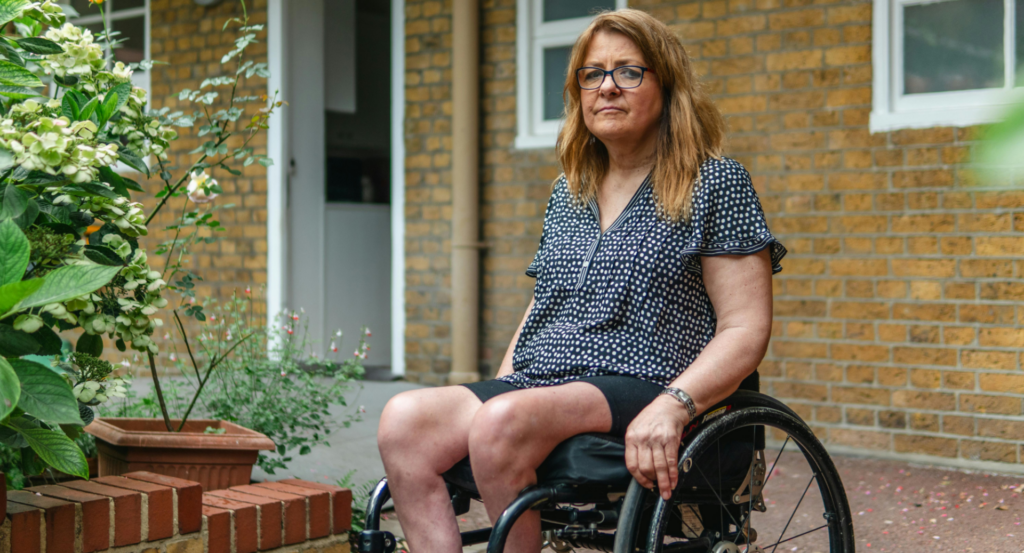
The Act also requires reasonable accommodations for people with disabilities. Landlords must allow service animals even in no-pet buildings. New multifamily housing must include accessible features. Housing providers cannot refuse to make reasonable modifications that enable people with disabilities to fully use and enjoy their homes.
Two federal agencies work together to enforce the Fair Housing Act. The U.S. Department of Housing and Urban Development handles individual complaints while the Department of Justice tackles broader patterns of discrimination.
HUD’s Office of Fair Housing and Equal Opportunity investigates complaints and attempts to resolve them through conciliation. When someone files a complaint, HUD serves notice on the alleged violator and conducts an investigation. In 2023, fair housing organizations, HUD, and state agencies received 34,150 complaints nationwide, according to the National Fair Housing Alliance’s 2024 Fair Housing Trends Report.
The Department of Justice steps in for cases involving patterns or practices of discrimination that affect multiple people or raise issues of general public importance. DOJ attorneys can seek compensatory and punitive damages, with civil penalties up to $50,000 for a first violation and up to $100,000 for subsequent violations. The department also runs a Fair Housing Testing Program, using testers who pose as prospective renters or buyers to uncover discriminatory practices.
HUD refers certain cases to DOJ, including those involving zoning laws, possible criminal violations, and situations suggesting systematic discrimination. State and local agencies certified under the Fair Housing Assistance Program also investigate complaints based on substantially equivalent state laws, creating a comprehensive enforcement network across the country.
Houston Habitat for Humanity operates under a strict nondiscriminatory policy aligned with both the Fair Housing Act and the Equal Credit Opportunity Act.
Race, sex, color, national origin, religion, familial status, age, marital status, disability, and income from public assistance play no role in choosing homeowners. This commitment reflects both legal requirements and core organizational values.
The selection process focuses entirely on legitimate criteria. Applicants must demonstrate a need for housing, show ability to pay an affordable mortgage, and commit to partnering with Habitat throughout the process. These objective standards apply equally to everyone.
Houston Habitat’s commitment extends beyond following the letter of the law. The organization actively works to create inclusive communities where families of all backgrounds can thrive.
We are pledged to the letter and spirit of U.S. policy for the achievement of equal housing opportunity. It represents a fundamental belief that everyone deserves a decent place to live.
Houston Habitat’s work embodies fair housing principles in practical ways.
The organization builds homes in diverse neighborhoods across Houston and Harris County. Location decisions consider access to quality schools, employment opportunities, transportation, and essential services. These factors help families build stable, prosperous lives.
New construction meets all accessibility requirements under the Fair Housing Act. Habitat homes include features that make them usable by people with disabilities. This commitment ensures that affordable housing serves the entire community.
Energy-efficient design makes homes more affordable to operate. Lower utility bills mean families have more resources for other needs. This practical approach to affordability aligns with fair housing goals of expanding housing access.
Despite decades of fair housing laws, discrimination persists. The National Fair Housing Alliance’s 2024 report revealed significant trends in complaint data.
Disability-based discrimination accounted for more than half of all complaints in 2023. This percentage has remained consistent for years, highlighting ongoing challenges for people with disabilities seeking housing.
Harassment complaints increased dramatically. Harassment based on color rose by 470.59 percent. Race-based harassment increased by 114.97 percent. These numbers suggest that some housing providers have become more brazen in their discriminatory behavior.
These statistics underscore why organizations like Houston Habitat remain important. Fair housing requires proactive efforts to expand access and create inclusive communities.
Habitat for Humanity International has consistently advocated for stronger fair housing protections and inclusive housing policies.
The organization opposed the 2020 rollback of HUD’s Affirmatively Furthering Fair Housing rule. This rule would have required communities to analyze barriers to fair housing choice and take steps to address them.
Habitat’s Cost of Home campaign explicitly acknowledges historic patterns of racial discrimination in housing and land use policies. The campaign calls for investments in racially segregated communities, expanded homeownership opportunities for households of color, and the elimination of barriers to communities of opportunity.
Houston Habitat for Humanity shares this commitment to advocacy. The organization participates in local, state, and national efforts to address the affordable housing crisis and promote fair housing principles.

Fair housing benefits everyone, not just those directly protected by the law.
Diverse neighborhoods foster stronger social connections. Children growing up in integrated communities develop broader perspectives and understanding. Research shows that diverse communities tend to be more resilient in the face of economic and social challenges.
Access to quality housing in areas with good schools and job opportunities reduces inequality. When families can live where they work, commute times decrease. More time with family improves quality of life.
Economic growth follows when people have stable housing near employment centers. Workers spend less on transportation. Businesses have access to larger labor pools. Communities thrive when housing barriers fall.
Houston Habitat’s work demonstrates these benefits daily. Families who achieve homeownership through our program gain stability and opportunity. Their children perform better in school. The families build equity and wealth over time. Neighborhoods benefit from engaged homeowners invested in their community’s success.
The Fair Housing Act transformed American housing policy in 1968. Yet the work remains unfinished.
Segregation persists in many American cities. People with disabilities still face barriers to accessible housing. Discrimination takes new forms as technology and housing markets evolve.
Organizations like HUD and DOJ provide essential enforcement. But federal agencies can’t solve the problem alone. Communities need nonprofit organizations, local governments, housing providers, and individual citizens to work together toward fair housing goals.
Houston Habitat for Humanity accepts this responsibility. Every home we build represents a commitment to fair housing principles. Every family we serve proves that affordable homeownership can be accessible to people of all backgrounds.
The Fair Housing Act promised equal opportunity. Houston Habitat for Humanity works every day to fulfill that promise.
Q: What should I do if I believe I’ve experienced housing discrimination?
File a complaint with HUD by calling 1-800-669-9777 or visiting their website. You can also contact your local fair housing organization or the Texas Department of Housing and Community Affairs. You have one year from the date of the alleged discrimination to file a HUD complaint. Don’t wait, as evidence becomes harder to gather over time. You can also consult with an attorney about your options for pursuing a private lawsuit.
Q: How does Houston Habitat ensure its homeownership program doesn’t discriminate?
Houston Habitat follows strict nondiscriminatory policies aligned with the Fair Housing Act and Equal Credit Opportunity Act. Our selection criteria focus entirely on objective factors like income, need for housing, ability to pay, and willingness to partner. Race, religion, national origin, sex, familial status, disability, age, marital status, and source of income never factor into homeowner selection decisions. Our staff receives regular training on fair housing requirements and our commitment to serving all eligible families equally.
Q: Does the Fair Housing Act apply to roommate situations and small landlords?
The Fair Housing Act includes some exemptions for very specific situations. Owner-occupied buildings with four or fewer units have limited exemptions for rental decisions. Single-family homes sold or rented by owners without using real estate agents or discriminatory advertising may also qualify for exemptions. However, these exemptions are narrow and don’t apply to discriminatory advertising or to real estate professionals. Roommate situations can be complex legally. Regardless of exemptions, discriminatory advertising always violates fair housing law, and most housing transactions remain fully covered by the Act’s protections.
Every day, teachers shape young minds, nurses care for our sick and injured, and first responders rush toward danger to keep us safe. These essential workers form the backbone of our community. Yet many of them struggle to afford a home in the neighborhoods they serve.
The challenge is real. Teachers in Houston can reasonably afford just over a quarter (25.5%) of homes in the metro area, according to research by Trulia. That means three out of four homes are out of reach for the educators guiding our children’s futures.
The problem extends beyond Houston. Nationwide, a buyer needs an annual income of at least $126,700 to afford the median-priced home, according to the Harvard Joint Center for Housing Studies 2025 report. Only 6 million of the nation’s nearly 46 million renters can meet this benchmark.
This is where Houston Habitat for Humanity steps in with workforce housing solutions designed specifically for hardworking families in our community.
Picture a nurse finishing a twelve-hour shift at a Houston hospital. She drives an hour to reach her apartment because she can’t afford anything closer. A firefighter works overtime to cover rent on a place far from his station. An elementary teacher grades papers late into the night, worrying about whether she’ll ever own a home near her school.
These scenarios play out across Houston every single day.
The National Low Income Housing Coalition reports that the hourly wage needed to afford rent on a one-bedroom apartment in America is $23.67, more than three times the federal minimum wage. Many essential workers earn decent salaries but still find homeownership frustratingly out of reach.
Rising costs hit these families particularly hard.

Workforce housing addresses the gap between market-rate housing and low-income housing assistance. It targets working families who earn too much to qualify for traditional affordable housing programs but not enough to afford market-rate homes.
Teachers, nurses, first responders, city employees, retail workers, and restaurant staff all fall into this category. They work full-time jobs. They pay taxes. They contribute to our community’s vitality. Yet homeownership often feels like an impossible dream.
Houston Habitat for Humanity recognizes this need. Our homeownership program serves families earning between 50-80% of the area median income. This income range perfectly captures many essential workers who keep Houston running.
Houston Habitat doesn’t just build houses. We build pathways to homeownership for working families.
Our approach starts with affordable mortgages designed to ensure families pay no more than 30% of their household income toward housing. This differs dramatically from the market where many families spend half their income or more on rent alone.
Qualified homeowners partner with Houston Habitat by putting in sweat equity hours. They work alongside volunteers to build their own homes and others in the community. This hands-on experience teaches valuable skills while reducing construction costs.
Financial education forms another crucial component. Houston Habitat provides counseling on credit building, budgeting, and mortgage management. These tools help families not just buy a home, but maintain it successfully for years to come.
The homes themselves meet or exceed all building codes. Every Houston Habitat home is Energy Star certified, meaning lower utility bills for families. Features like radiant barrier roof decking, high R-factor insulation, and double-pane windows keep cooling costs down in Houston’s hot climate.

Homeownership through Houston Habitat creates ripples of positive change.
Shorter commutes mean more time with family. A teacher who lives near her school can participate in after-school programs and parent conferences without rushing across town. First responders living in their service areas arrive at emergencies faster.
Financial stability grows as families build equity instead of paying rent. Monthly housing costs become predictable rather than subject to annual rent increases. Families can plan for the future with confidence.
Children benefit enormously. Research shows that stable housing improves school performance, reduces stress, and creates better outcomes for kids. When families own their homes in safe neighborhoods, children thrive academically and socially.
Community connections deepen. Homeowners invest in their neighborhoods through maintenance, relationships with neighbors, and long-term commitment to the area.
Houston Habitat offers several program options that benefit essential workers.
Our standard homeownership program provides affordable mortgages and houses built to Energy Star standards. These homes feature three or four bedrooms, attached garages, and fenced yards in safe neighborhoods.
The Homes for Texas Heroes program, administered by the Texas State Affordable Housing Corporation, offers additional assistance specifically for teachers, police officers, corrections officers, firefighters, EMS personnel, and veterans. This program provides down payment assistance between 3-5% of the loan amount as a gift with no repayment required.
Veterans benefit from special considerations through Houston Habitat’s Veterans Build program. We proudly serve those who served our country.
Real families prove the power of workforce housing every day.
Teachers who thought homeownership was years away find themselves holding house keys within months. Nurses who spent hours commuting now walk to work. First responders build strength and stability for their own families while protecting ours.
Families work hard, meet requirements, and take pride in their accomplishments. They become homeowners who maintain their properties, support their neighbors, and model responsibility for their children.
The impact extends beyond individual families. Entire neighborhoods benefit when essential workers live where they work. Communities grow stronger. Property values stabilize. Local economies thrive.
Getting started is simpler than many essential workers imagine.
Visit the HFH website and take the eligibility quiz. This quick assessment helps determine if you qualify for Houston Habitat’s homeownership program. The screener takes just 15-20 minutes and is available in both English and Spanish.
Attend a Virtual Homeownership Information Session to learn more about the process, timeline, and requirements. These sessions answer common questions and provide a clear picture of what to expect.
Connect with our family services team to discuss your specific situation. We understand that every family’s circumstances are unique. Our staff can explain which programs might work best for you and guide you through the application process.
Remember, you can apply more than once. If you don’t qualify initially, we can work with you on building credit, reducing debt, or meeting other requirements. The door to homeownership remains open.
Essential workers deserve to live in the communities they serve. They shouldn’t have to choose between working in Houston and affording a home here.
Houston Habitat for Humanity bridges this gap with workforce housing solutions that work. We provide pathways to homeownership for teachers, nurses, first responders, and other essential workers who make our city function.
The benefits extend far beyond individual families. When essential workers own homes near their workplaces, Houston becomes more resilient, more connected, and more equitable.
You can be part of this solution. Whether you’re an essential worker exploring homeownership options, a volunteer ready to build, or a donor supporting the mission, Houston Habitat welcomes your partnership.
Together, we’re building bright futures for the families who build Houston every day.
Q: Do I make too much money to qualify for Houston Habitat if I’m a teacher or nurse?
Many essential workers fall perfectly within our income requirements. Houston Habitat serves families earning between 50-80% of the area median income. For a family of four, this means annual income between $47,300 and $75,700. We encourage you to take our eligibility quiz online to see if you qualify.
Q: What is sweat equity and how much time does it require?
Sweat equity means contributing your own labor to your home and others being built. Houston Habitat requires up to 250 hours of sweat equity. You can work on construction sites, help at ReStore locations, or participate in community gardens. For those unable to do construction work, we offer alternative options on a case-by-case basis.
Q: How long does the Houston Habitat homeownership process take from application to move-in?
The timeline varies by individual circumstances. Generally, applicants are notified of acceptance within 60 days after completing the application and submitting required documents. From acceptance to move-in typically takes several months as you complete financial counseling, accumulate sweat equity hours, and your home is built. The investment of time is worth it for affordable, quality homeownership.
Q: Can single people without children qualify for a Houston Habitat home?
Absolutely. Houston Habitat follows a nondiscriminatory policy and considers applications from all backgrounds. Single individuals, couples without children, single parents, and families all qualify based on need, income requirements, ability to pay, and willingness to partner with us. Your family structure doesn’t determine eligibility.
Low-Cost Home Renovation Programs in Houston can feel nonexistent. But you’re not alone. Many homeowners in Houston need affordable housing options for home repairs and several housing programs can help. Houston has programs and opportunities that will offer help.
Houston has programs for low- to moderate-income homeowners. These housing development programs focus on repairs to make repairs safe and habitable. Repairs include fixing roofs, plumbing, electrical systems, and structural issues.
Some programs offer full home renovations in certain situations. Let’s look at a few options below for home renovation, single family housing, and community development programs.
Houston Habitat for Humanity is a well-known organization for safe and affordable housing. They have programs like the Critical Home Repair Program.
This program addresses roof and plumbing repairs. Another program is the Disaster Home Repair Program for disaster-related damages.
The City of Houston’s Home Repair Program helps homeowners with critical repairs. Funding may be limited so contact the program directly. Get current status and application information.
Harris County also has its own Home Repair Program. It serves very low to low-income homeowners. This county program focuses on fixing health and safety hazards like a leaking roof. Check out their program guidelines and more information about payment assistance and other initiatives.
Rebuilding Together Houston serves the community with free home repairs, often for elderly residents. They also support programs like Veterans Home Repair.
Sometimes additional resources can help with Low-Cost Home Renovation Programs in Houston. These can be helpful as you look into family housing.
Look into home renovation loans. These specialized loans fund repairs, sometimes with competitive rates.
United Way’s 211 helpline connects those in need with providers. They specialize in services beyond just finding a provider. They offer legal services and bereavement services.
They serve Texas. This makes them a resource for those looking for single family housing in rural development areas of Harris County and beyond.
Eligibility varies by program. Typically it’s income limits, home ownership status, and property location (rural vs. non-rural). Some programs prioritize senior citizens, families with children under 18, or people with disabilities.
Several programs in Houston assist low-income families. This includes programs run by the City of Houston and Harris County. Houston Habitat for Humanity and Rebuilding Together Houston also have income-based programs for lower-income homes.
Finding low-cost Home Renovation Programs in Houston takes time but help is available. By looking into the options and resources, homeowners can find help they need. Check out the resources that focus on housing programs, property taxes, and payment assistance for more information about living options. Be patient, these programs can get you to live safely and affordably.
Finding affordable housing is hard for many families. So here’s the question: how does Habitat for Humanity choose where to build? It’s not random, many factors go into where they build, from local community needs and county land availability to national and international initiatives. This article covers the process for local projects, including their home ownership program and sweat equity.
Habitat for Humanity operates through local affiliates. These affiliates like Houston make many local area-build decisions.
These decisions impact the communities served. Habitat for Humanity Affiliates often work on projects for years to make a positive impact in the areas.
Here’s a closer look at how this decision-making process works for each habitat house.
Each local HFH first determines the service area’s need for affordable housing. This step involves gathering data and insights to understand the local housing market.
HFH looks at:
This type of assessment allows us to target the most critical areas so that we can allocate resources where they will have the greatest impact. By understanding the specific challenges in the service area, HFH Houston can develop solutions to address the affordable housing shortage.
Finding land is another big challenge in affordable housing. Ultimately, building even simple homes comes down to land availability and cost. The scarcity of land drives up prices and makes it hard for us to build affordable homes.
The cost of land is a big part of the total cost of construction. In many areas, the cost of land is so high it’s a big chunk of the total project cost. This leaves developers with a limited budget for actual construction and makes it hard to build affordable well-built homes.
Land availability is another factor that affects our ability to build affordable homes. In many cases, land is scarce and what’s available is reserved for more lucrative projects. This scarcity of land forces developers to look for alternative locations that may not be as desirable and further reduces the affordability of the homes.
Zoning and regulatory issues can also limit land. Strict zoning laws and regulations can restrict the use of land and make it hard to build. And the long and sometimes costly approval process can further increase the cost of land acquisition making it even harder to build affordable homes.
This way HFH can overcome land problems and use our resources better to make a bigger impact in our community.
HFH projects rely on local volunteers, donors, and established community partnerships. These are the pillars of support for a long-term project.
Local volunteers bring expertise and knowledge to a project. They know the local culture, customs, and needs and are invaluable in identifying the most pressing issues and developing solutions.
Donors provide the financial resources to fund HFH projects. Their support helps us buy land, build homes, and provide services to families in need.
Established community partnerships are key to mobilizing resources and expertise. These partnerships help us leverage the strengths of local organizations, businesses, and government agencies to make projects more efficient and effective.
By building relationships with local volunteers, donors, and community partners, HFH projects can have long term impact on families and communities. This collaborative approach creates a sense of ownership and responsibility so projects continue to thrive long after launch.
While local affiliates have decision making power, Habitat for Humanity Global provides guidance and principles.
These broader factors further inform build location decisions. HFH’s overall strategy allows us to adapt to different environments.
HFH Global coordinates local projects with national housing goals. Local construction requirements, land zoning, and permit regulations also influence where we build.
HFH affiliates comply by adapting to existing regulations thereby contributing to overall housing stability. Their goal is to find the right locations and navigate local regulatory environments to build the most efficient and sustainable way possible.
HFH is a global nonprofit in over 70 countries including the USA. Our mission is to increase access to decent, sustainable, and affordable housing through community development.
Our focus on home ownership drives where they build and purchase land strategically to achieve HFH goals.
HFH looks at many factors to help with home buying such as land availability, community needs, and local regulations. Local community support from individuals and businesses is needed to get build approval.
National and international HFH objectives and the success of our planned giving programs also influence location decisions so our local efforts align with our global missions.
No, homeowners purchase their homes with an affordable mortgage and put in “sweat equity” hours building alongside other Habitat for Humanity home buyers.
Monthly mortgage payments will apply and payment of a mortgage will be no different than paying any conventional mortgage lender. However, payments will be smaller since these will be smaller affordable housing projects.
Habitat builds homes worldwide. Projects in the US range from small builds to large planned communities. You can find out about active projects through your Houston HFH affiliate.
HFH chooses families based on need, willingness to partner with us, and ability to repay an affordable mortgage. The process involves an in-depth look at finances such as requesting tax information through the IRS website, verification of data submitted such as postal address, email address, and work telephone number, and comparing work telephone with any official documentation.
HFH’s site selection is a thoughtful process that considers community needs, local land cost, local partnerships, national goals, and international initiatives. By balancing community-driven factors with broader goals, HFH serves an often overlooked population but also leverages programs to help potential homeowners become more invested in themselves.
Local chapters rely on community support and partnerships with municipalities and private organizations to secure land and reduce costs. Local affiliates often plan and fundraise two or more years in advance of construction.
HFH Houston brings stability to families and neighborhoods and is committed to helping families in need become homeowners. Learn more and partner with Houston HFH today.
It’s income tax time, and you’re prepping for homeownership. Here are 4 tips to consider when preparing your 2024 income tax return including why you shouldn’t claim a business loss when applying for a mortgage loan.
Claiming a business loss on your income tax return can negatively impact your ability to qualify for a mortgage loan. Here are a few reasons why:
It’s always a good idea to consult with a mortgage advisor or tax professional to understand how your specific situation might be impacted.
While many people have a specific dream home in mind, it’s important to purchase a home that is safe, well-built, and within a mortgage you can afford.
Housing is where the majority of Americans spend their income, and prices are on the rise. Affordable housing has trended toward smaller homes due to the many associated cost savings. As of September 2024, the median listing price per square foot in Texas is $187, reflecting a 35.8% increase over seven years.
So, what size house is best for you? First, determine how many people will live in the house full-time. Next, consider the monthly expenses for your home, including mortgage, insurance, and utilities. Balancing these factors will help you determine the ideal size for your new house.
What exactly is a “small house”? The average house in the United States is 2,500 square feet. Anything below that is considered “smaller.” (This differs from tiny homes, which are generally 500 square feet or less.)</p?
A small house can be an excellent option for those interested in minimalism, energy conservation, downsizing and specifically, first-time homebuyers. Small homes allow young individuals to experience all the responsibilities involved with homeownership without breaking the bank.
Heather Higgins, a New York based designer who frequently handles projects in the 1,000-square-foot range, says, “Requiring less time, energy, and money, smaller living spaces provide greater lifestyle flexibility.”
In addition to freeing up time, smaller homes offer numerous benefits:
Some people believe “bigger is better,” while others have reservations about smaller houses. Below are common hesitations and solutions:
In 2024, newly built homes got smaller for the first time in decades. Home sizes peaked in 2021 when the pandemic forced many people to work from home and additional space was needed. According to the U.S. Census Bureau, the average square footage of new housing units dropped from 2,500 square feet in 2021 to 2,300 square feet in 2024.
Stagnant wages, coupled with rising building and labor costs, are driving homeowners toward smaller homes. In Texas, where the minimum wage has remained $7.25 per hour since 2009, economic pressures are significant. For instance, in Houston, a standard no-frills bathroom sink cost $44.24 in 2022 but increased to $48 by 2024.
Less square footage translates into big savings. To calculate potential savings, add up your current monthly housing expenses (mortgage, utilities, insurance, and maintenance). Compare this total to what you’d spend on a larger house by doubling or tripling the amount. The difference shows how much a smaller home can benefit your finances.
A home’s size doesn’t limit its potential for comfort or style. Many no-cost and low-cost strategies can make a small home feel spacious and luxurious:
Interior designer Dustin Gerken of Dustin Gerken Design says, “One of the most valuable commodities in a residence is floor space. Use the illusion of spatial depth to your advantage by pulling furniture off the wall to add shadow and gradient to the wall behind it.”
Visit both Houston Habitat for Humanity ReStore locations to find great deals on beautiful new items for your home. Stock is always revolving to check often!
In short, yes. Increasing costs and a stubborn housing market have made smaller houses more appealing. While it might not be your forever home, buying a smaller house is a crucial step toward greater financial stability and future housing options.
Everything possible in a large house is an option in a smaller home! First-time homebuyers benefit from lower prices that require smaller down payments and monthly mortgage payments. A smaller home leaves more room in your budget for higher-quality furniture and home improvements. You can invest in durable, long-lasting items rather than cheaper alternatives, saving you more money in the long run. Using creativity and a little bit of the ever-increasing savings made from this decision, the design and feel are completely up to you. Reduced utility costs are also a major benefit – air conditioning a smaller home during Houston’s summer heat can add up to big savings!
Plus when you get ready to sell your home, you are in a positive financial position. Home prices typically depend on the square footage and size of the house. Smaller homes often attract a broader range of buyers due to their affordability, making them more likely to sell.
Virtually tour some of our Habitat Homes, explore the possibilities, and start your journey toward homeownership today.
In a blog post from earlier in 2024, we busted 11 myths commonly associated with Habitat for Humanity. One belief, however, deserves its own post. Of those who have considered working towards a home with Habitat for Humanity, some have decided otherwise with the assumption that they make too much income to qualify. This self-sabotage is a mistake! Before supposing you make too much money for a habitat home, keep reading to learn about the income guidelines. Habitat homes are designed for workers with a dependable job living in an unaffordable area.
Much of HFH information is available in both English and Spanish! Don’t let language get in the way of homeownership. ¡Nuestra información estádisponible tanto en inglés como en español! No permita que el idioma se interponga en el proceso de ser propietario de una vivienda.
Homeownership Program Criteria is grouped into several categories. First, answer these questions. Do you live in overcrowded or substandard housing? Do you pay more than 30% of gross income on rent and do you live in an unsafe and/or unsanitary neighborhood? If yes, then are you a US Citizen or do you have permanent residency status? If yes, are you willing to partner with Houston Habitat for Humanity to put in up to 250 hours of “sweat equity” (more on this later), and complete pre-purchase and post-purchase programs which include financial counseling?
If ‘yes’ was your answer to the above questions, then Houston Habitat for Humanity income requirements are up next for review. For a family of one, the minimum income requirement is $33,150 and the maximum income is $53,000. (No, you don’t have to be married or have children to be eligible). For a family of four, the minimum income requirement is $47,300 and the maximum income is $75,700. For a family of seven, the minimum income requirement is $58,700 and the maximum income is $93,900. Information about Houston Habitat for Humanity income limits are listed on our website for family size, ranging from one person to eight people. These numbers are based on the Area Median Income (AMI) for Houston, The Woodlands and Sugar Land as reported by HUD.
The final aspects of a Habitat homeowner are a satisfactory credit score, and having the ability to afford monthly mortgage payments, including escrow and insurance. The next section in this post contains information about credit and raising your credit score.
A credit score is a three-digit number based on the information in your credit report, a detailed history of credit cards used and loans received. Credit scores may account for the number of years you’ve had credit, how much of your available credit you’re using, if late payments have been made, and any recent negative actions or credit applications. A lower credit score can cause higher interest rates.
Federal law allows you to get a free copy of your credit report every 12 months from each credit reporting company. Check your credit here or here for free. Usted puede solicitar una copia de su informe crediticio (gratis y enespañol) de cada una de las tres principales agencias de crédito: TransUnion: Llame al 800-916-8800, Equifax: Visite el enlace o llame al 888-378-4329, Experian: Haga clic en el enlace o llame al 888-397-3742.
Looking to improve your credit? Dispute inaccurate information on your credit reports, keep debts low, make on-time bill payments, retain your oldest account, and avoid applying for new credit accounts.
Sweat equity is “contribution to a project or enterprise in the form of effort and toil”. Partnering with Habitat for Humanity requires sweat equity, which can take multiple forms for future homeowners. “Sweat equity is a transformational experience for families and a cornerstone of our homeownership program,” says Sonia Lee, director of homeowner and mortgage services at Habitat for Humanity International. “The skills and knowledge gained through activities like volunteering on a build site…help set new homeowners up for success long-term.”
For those physically unable to do construction, Habitat allows on a case-by-case basis, clearing debris from build sites, working as a greeter or helper at a Houston Habitat ReStore, or other lower-impact tasks.
Not sure if you are eligible per Homeownership Program Income Guidelines?Just apply to see if you qualify. For those who didn’t make it through a few years ago, the monthly income numbers are different now. And keep applying if you don’t make it today; qualifying thresholds can shift in another year or two.
Prepare, then apply in English or Spanish and submit your documents. Upon application completion and receipt of required documents, Houston Habitat will begin the review process. Applicants are generally notified of their acceptance into the program 60 days after review. For those who do not meet Houston Habitat for Humanity’s criteria for affordable mortgages and are not selected for the program, an informational letter will be sent.
Habitat wants you and your family to have safe, affordable housing. We diligently follow a nondiscriminatory policy aligned with the Fair Housing Act and Equal Credit Opportunity Act, which dictates that race, sex, color, national origin, religion, familial status, age, marital status, disability and/or income from public assistance are not factors in choosing homeowners. Join our Virtual Homeownership Information Sessions to learn more about our program individually, or gather a group of 10 people or more to schedule a free 60-minute virtual information session with us. We are happy to answer any questions via email familyservices@houstonhabitat.org or phone 713-671-9993 x287, and look forward to walking beside you on this journey to meet all the qualifications for a Habitat homeowner!
There are lots of questions about buying a home for the first time. Here are four of the most commonly asked questions about home buying, as they apply to Houstonians in 2024:
Information about interest rates is not something most schools teach. Therefore, many adults looking to buy a house have thoughts such as “How do interest rates actually work?”, “How are interest rates calculated?”, and “What is a good interest rate?”.
First, what is interest and what is an interest rate? Interest is the price you pay to borrow money. When borrowing money, the original amount borrowed must be paid back, plus a certain percentage of the total loan amount. This certain percentage is the interest. The exact percentage applied to the borrowed money is the interest rate.
An interest rate is determined by several factors, and each lender uses different factors. Some considerations when deciding an interest rate are credit scores, income, length of the loan (longer will have a higher rate), as well as economic trends which no one person has control over. Understanding interest rates is important because higher interest rates mean paying more money over time. For example, a $200,000 loan with an interest rate of 4% simple interest means the total amount paid back to the lender is$208,000. This is the original amount of $200,000 plus $8,000 (which is 4% of $200,000).
What is considered a good interest rate can change almost daily, so be sure to do your research and keep tabs on which direction rates are heading. In mid-2024, a good home loan rate was 6.17% for a 15-year fixed loan, while 6.89% was a good rate for a 30-year mortgage, according to Freddie Mac’s weekly survey. Referencing the example above, a $200,000 loan would have to be paid back as $212,340 over 15 years and $213,780 over 30 years.
One of the benefits of working with Habitat for Humanity is that they are able to negotiate with lenders to secure a mortgage that fits your budget, often below current fixed mortgage interest rates, and making certain you can afford your mortgage.
In the world of home buying, being a first-timer can have many benefits, such as lower interest rates. That is why it is important to know if you can be considered a first time home buyer. There are more variations of this title than one might think. Did you know you can be a first-time home buyer more than once?
As a few examples of accessible assistance, there is a Texas first home buyer program, while certain occupational groups can receive special bonuses for being first-time home buyers. For those identifying as the following, research what additional benefits are available to you: veterans, service members, educators, firefighters, EMTs, law enforcement, doctors, and nurses. Spending time reviewing all possible avenues of support can save major money in the end.
Houston Habitat for Humanity offers equal opportunities to all. Applicants receive consideration for home ownership without regard to race, color, religion, national origin, sex, disability, and familial status. This means a single person can get a Habitat for Humanity home as likely as a married couple, a single parent, or a multiple person household.
Many U.S. households spend a large portion of their income on housing, meaning they have less money for other essentials like food, clothing, transportation, and healthcare. For those without the benefit of a second income from a partner, many single people carry the full weight of expenses alone, including emergencies. For a 1-person household, the income requirements are $33,150 minimum and $53,000 maximum. The single home buyer must also demonstrate a need for shelter, a good credit score, ability to pay, have a willingness to partner, and be a legal resident 18 years of age or older.
When looking to establish a permanent home in Houston, many consider location to be a top priority. Houston is a very large city with many diverse neighborhoods and communities and location can often be the biggest factor in determining the price of a house.
So what are the top neighborhoods for settling down in Houston?
Robins Landing is one of Houston’s newest perfect neighborhoods featuring 460 single-family homes on 127-acre property full of amenities in North Houston. It is also Houston’s first affordable master-planned community, featuring stormwater infrastructure, a childcare center, healthcare, banking, a library, and onsite green spaces and trails. Single-family houses in Robin’s Landing feature 3 or 4 bedrooms, 2 bathrooms and range in size from 1,100 to 1,400 square feet. Robins Landing is ideal for those looking for a walkable and family-friendly neighborhood.
The historic Settegast neighborhood is another affordable place for those looking to own. Houston Habitat has been working to revitalize this neighborhood by building new homes and repairing numerous homes damaged by Hurricane Harvey. Long-time and new residents are highly committed to maintaining and improving their neighborhood. This includes multiple beautification projects and a community garden! If you are looking for a strong community vibe, check out Settegast.
Want more? Below is an alphabetical listing of additional affordable areas in Houston to consider.
The home-buying process can feel overwhelming, but you don’t have to navigate it alone. Houston Habitat for Humanity is here to support you on your journey to homeownership. Join countless Houstonians who have built and purchased homes of their own. Begin by taking our Homeowner Eligibility Quiz—it’s the simplest way to see if you qualify to become a Houston Habitat homeowner. The screener, available in both English and Spanish, takes just 15-20 minutes to complete. Be sure to have your financial, debt, and living information ready. There’s no limit on how many times you can apply, so take the first step today for a brighter tomorrow!
Owning a home means responsibility. Homeowners must pay bills and taxes keep up with maintenance and common repairs to the structure, HVAC, electrical, plumbing and more. Being timely with repairs to the home is beneficial in many ways, such as maintaining the highest levels of security and functionality, maintaining the property’s value, and preventing minor issues from becoming major problems, like a small leak becoming a whole wall teardown.
Sometimes, homeowners cannot afford repairs, and repair assistance is needed. Below is information about grant programs, tips for upkeep, senior home repair programs and veterans home repair grants. Bookmark the page and share this blog with anyone you think could benefit!
According to Consumer Affairs, plumbing and air conditioning systems are the top two most common fixes a Texas home needs. After those are refrigerators and smoke detectors, and lastly, general electrical and water heater issues. A 2021 survey found that 77% of new homeowners will experience an “unexpected issue” that needs repair during the first year of homeownership.
Deferred maintenance, or holding off on needed repairs, often becomes more expensive in the long run once the work becomes critical and needs to be done. Research shows that delaying maintenance can potentially increase costs by as much as 600%. Increasing costs aren’t the only issue; a lack of energy efficiency and possible safety hazards can arise when waiting on repairs. If you need time to figure out how to pay for home repairs, here are tips to decrease the impact of deferred maintenance.
A good way to save money overall is by doing minor fixes yourself. The internet has free, helpful step-by-step videos and instructions by the barrelful for easier and smaller tasks such as patching wall holes and cracks, fixing leaky faucets, and changing an electrical socket. These resources are available in a wide variety of languages and skill levels.
Once you feel more confident, visit a Houston ReStore to pick up affordable tools and materials for your project at a fraction of retail prices!
Another way Houston Habitat for Humanity provides assistance is through its active home repair program which preserves existing affordable homes for low-income individuals and families in Houston, TX. This home repair program is a big part of Houston Habitat’s mission and benefits the Houston community by slowing neighborhood character change or gentrification within the city.
The Housing Construction and Inspection services, within the Housing and Community Development of Harris County, provide financial and technical assistance to make emergency repairs to the homes of very low- to moderate-income homeowners at their primary residential property. Further, the Harris County Home Repair Program provides financial assistance via a grant or deferred payment loan to qualified homeowners needing major rehabilitation and repair or replacement of water wells and septic systems. Remember to review these government home repair grants and loans carefully before applying.
In Texas, seniors (those aged 65 years and older) benefit from property tax deferral, Medicare and Social Security options, senior community services such as AAA, and the Silver Alert program. Houston Habitat for Humanity also has a Senior Repair program. This provides effective and sustainable solutions for elderly homeowners to be able to age in their own comfortable homes. Houston Habitat uses the Housing Plus model and Aging in Place strategies when working with older adult homeowners. Housing Plus includes two assessments to ensure a complete understanding of the low-income senior population in Houston and Harris County.
Houston Housing Authority also offers assistance through the Old Adult Home Modification Program (OAHMP). OAHMP focuses on low-cost, high-impact house modifications such as the installation of adaptive equipment such as a temporary ramp, risers for chairs and sofas, non-slip strips for tub/shower or stairs, raised toilet seats and tub/shower transfer benches to enable older adults to remain safely in their homes. This program primarily relies on the expertise of a licensed occupational therapist to confirm the home modifications to address the individual’s specific needs and goals, while promoting full involvement in daily activities.
Houston Habitat is a proud member of the Habitat for Humanity Repair Corps. This means we offer repairs to the homes of low-income veterans as part of our dedication to supporting and honoring the veteran community. Our organization is generously funded by The Home Depot Foundation, which enables Houston Habitat for Humanity to help veterans build strength, stability, and independence through disabled veteran home repair help with owner-occupied homes. Another veteran perk: all U.S. veterans receive 10% off at both Houston Habitat for Humanity ReStore locations with a valid ID!
The Veterans Land Board also has a Home Improvement Program, which provides loans of up to $25K for repairs on Texas primary residences: single-family dwellings, condominiums, duplexes, triplexes, or four-plexes. These loans are available for veterans and military members who are over 17 years of age and a legal state resident, plus an active duty military member, a member of the Texas National Guard, a reserve component military member having completed 20 qualifying years for retirement, a veteran having served at least 90 active duty days unless discharged sooner due to a service-connected disability and not discharged dishonorably, or a surviving spouse of a Veteran listed as missing in action or whose death was service connected. Learn more on the Texas Veterans Land Board website, under ‘Loans’.
Check out our dedicated blog post about Home Repair Steps after Storm Damage. It lists information on how to assess damage, what permits are needed for reconstruction, and how to choose the best contractor for work outside of the do-it-yourself scope.
Planning and preparing for routine home repair is an important project that pays off in the long term. Before doing the repairs, check your eligibility for government-assisted programs and bookmark websites with free information on DIY home repairs. Easiest of all, follow our success stories and read more about Houston Habitat for Humanity Home Repairs to see what is best for your home and your family!
Current Habitat for Humanity homeowners, those who have applied to Houston Habitat, and those who are interested in becoming a homeowner are a diverse community. Families, veterans, seniors and refugees who all come from different backgrounds and experiences yet are alike in their passion for homeownership. After working closely with Houston Habitat for Humanity staff and putting in their sweat equity, owning a home becomes a reality. And each homeowner’s relationship with Habitat extends past home purchase. Houston Habitat for Humanity stays connected to homeowners with follow-up engagement, commonly known as Post Purchase Support.
Maintaining a home requires responsibility, knowledge, and resources. Houston Habitat understands the challenges of being a homeowner, so we work to help before, during, and after the purchase process. Post-Purchase Support begins when someone officially becomes a homeowner and is focused on financial education, homeowner resources, and community support. Use of post purchase resources makes for successful long-term homeownership and is a key part of the Habitat homebuyer process.
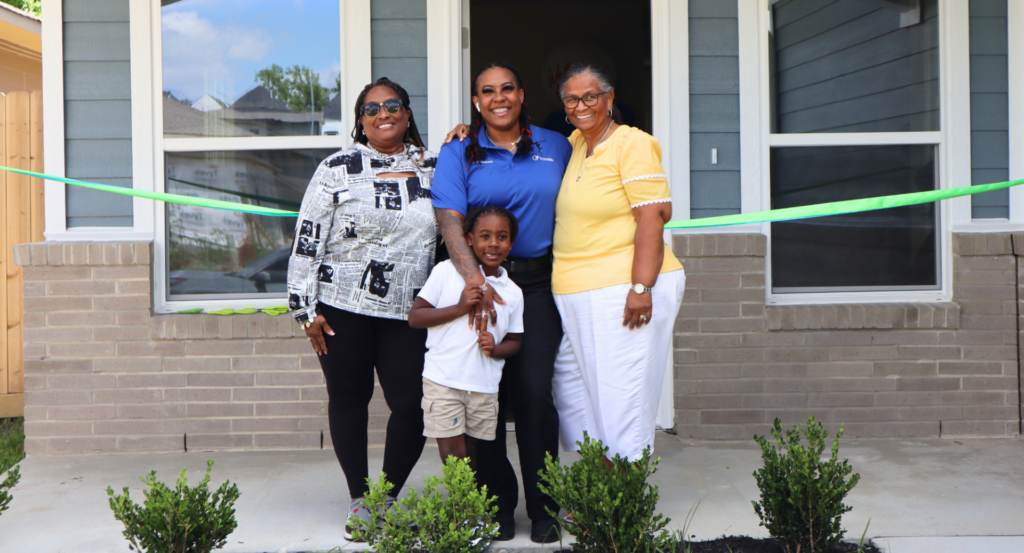
Once qualifying, applying, building, and house closing is complete, a colorful ribbon is cut and a homeowner is officially made! After this point, all Habitat homeowners must pay their mortgage and bills each month. This is also the time when post-purchase support begins. Houston Habitat staff provide homeowner assistance with understanding property taxes and how to purchase homeowners insurance, as well as ongoing mortgage questions, access to resources for financial services, repair, and community education.
Everyone needs help understanding the best ways to utilize their money. With this in mind, Houston Habitat for Humanity integrated financial education and referral resources into its post-purchase support. Houston Habitat offers information about ways to prevent mortgage default, such as foreclosure prevention and avoiding predatory lending, identity theft and credit card fraud. Assistance with refinancing, delinquency, and crisis situations is also offered.
A home of your own is a wonderful thing and keeping it as new as when it was built takes effort. Houston Habitat for Humanity provides checklists plus guidance on maintenance and basic repairs, as well as information about energy conservation, regional landscaping and seasonal upkeep. Home warranty coverage is very accessible and comes in increments of 1 year, 5 years, and 10 years. A listing of recommended contractors is also offered to homeowners as well as personal assistance with homeowner associations (HOAs). Some Habitat homeowners even qualify for minor repair programs funded by grants.
For the DIYers, Houston has two ReStore locations with cost-effective materials and supplies for maintaining a home. These home improvement stores sell new and like-new furniture, lighting, glass, paint, plumbing, roofing, tools, doors, fans, windows and more at lower-than-average retail prices. We post regular promotional codes for extra savings – follow us on Instagram!
The third tier of post purchase support is the connection between community engagement and homeowners. Houston Habitat for Humanity aids with clean-up days and revitalization projects, such as neighborhood fencing and building neighborhood gardens like the Settegast Community Garden.
Habitat events are popular too: for example, year-round home dedication ceremonies and autumn Truck or Treat gatherings are open to all to attend! What’s more, many homeowners choose to volunteer with Habitat on future builds, while continuing to spread the word to others about Habitat services. Some seasoned homeowners have even offered to assist new families with the process!
Houston Habitat for Humanity truly backs homeowners, beginning from the very first inquiry. Ready to start? Take the eligibility quiz. Have a Habitat home and need financial education, homeowner resources, or community support? Reach out to us directly to request support or plan to attend a Post Purchase Workshop. Your homeownership success is our priority!
Sources:
